Common Causes of Basement Water Leaks in Boston Homes
August 25, 2026

Call or Text
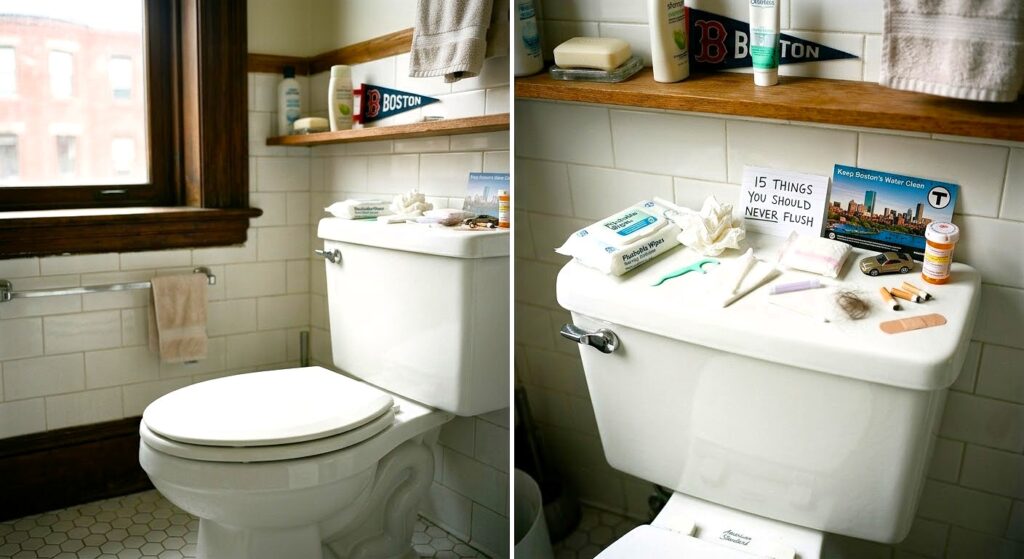
Most people assume that if something fits down the toilet, it’s safe to flush. Unfortunately, that assumption is responsible for thousands of clogged drains and sewer backups across Boston every year. Toilets are designed to handle only two things: human waste and toilet paper. Everything else—no matter how small it seems—can create blockages in your pipes, your home’s sewer line, or even the city sewer system.
For homeowners dealing with repeated clogs or slow drains, calling a plumber in Boston is often the best way to fix the problem before it turns into a messy and expensive repair.
Here are 15 common items that should never be flushed down a toilet.
Despite the marketing on the package, so-called flushable wipes are one of the biggest causes of plumbing problems. Unlike toilet paper, wipes don’t break down quickly in water. They often get caught in pipes and combine with grease and debris to form massive blockages known as fatbergs. Plumbers across the city regularly deal with these clogs when providing drain cleaning in Boston homes.
Paper towels are thicker and stronger than toilet paper, which means they don’t dissolve properly once flushed. Instead, they tend to clump together in your pipes and create stubborn blockages that require professional Boston plumbing services to remove.
Tampons, pads, and other hygiene products are designed to absorb moisture and expand. Inside a sewer pipe, that expansion can quickly block wastewater flow. Many emergency calls to a Boston plumber involve clogs caused by these products.
Cotton may seem harmless, but these items easily snag on rough sections of pipe and begin collecting other debris passing through the system. Over time, this buildup can lead to a serious blockage requiring professional drain cleaning in Boston.
Dental floss is surprisingly dangerous for plumbing systems. It doesn’t dissolve in water and can wrap around other debris inside pipes, creating a net that traps hair, grease, and waste. Many expert plumbers in Boston have pulled large clumps of floss out of clogged drains during routine service calls.
While grease is more commonly poured down kitchen drains, some homeowners mistakenly flush leftover cooking oils down the toilet. Once grease cools, it solidifies inside pipes and contributes to large sewer blockages. This is one of the leading reasons homeowners eventually need plumbing repair in Boston.
Even brands labeled as “flushable” can create problems in plumbing systems. Cat litter absorbs moisture and expands quickly, which can clog both household pipes and municipal sewer lines. Boston plumbing professionals strongly recommend disposing of litter in the trash instead.
Hair is notorious for causing plumbing problems because it easily tangles and collects debris. When flushed down a toilet, hair can combine with soap residue and other waste to form stubborn clogs deep in the pipes. This often leads homeowners to call a Boston plumber for professional drain clearing.
Flushing medication down the toilet can harm both plumbing systems and the environment. Pharmaceuticals entering the wastewater system may eventually reach local waterways. Boston environmental agencies recommend disposing of unused medications through designated drop-off programs.
Food belongs in the trash or compost—not the toilet. Even small pieces of food can create buildup inside plumbing systems. Over time, this accumulation can lead to slow drains and costly plumbing repairs.
Most plumbing systems in Boston rely on narrow sewer pipes that must remain clear to carry wastewater away from the home. When foreign objects are flushed, they can easily become trapped inside those pipes. Once a blockage forms, it can restrict water flow and eventually cause sewage backups inside the home. At that point, homeowners often need professional drain cleaning or plumbing repair in Boston to resolve the issue.
If your toilet frequently clogs, drains slowly, or makes gurgling sounds, it may indicate a deeper plumbing problem. Ignoring the warning signs can lead to serious sewer issues that require more extensive repairs. A licensed plumber in Boston can inspect your plumbing system, clear stubborn blockages, and ensure your pipes are functioning properly.
Toilets are built for a very specific purpose. Flushing anything other than waste and toilet paper can quickly lead to clogged pipes and expensive plumbing repairs. If you’re dealing with persistent clogs or slow drains, contacting a trusted Boston plumber can help prevent small issues from turning into major plumbing disasters.
When it comes to protecting your home’s plumbing system, a little caution—and the right Boston plumber, like T-Flow Plumbing can save you a lot of trouble down the road. Give us a call and we can meet you to discuss your project and provide you with a free estimate. We’ll show you why we’ve been the best plumber in Boston. Simply contact us below and speak to the owner!
(617) 818-1229 or TFlowplumbing@yahoo.com
Our expert plumbers since 2000, regularly help homeowners across Boston neighborhoods including:
Cambridge, Somerville, Jamaica Plain, Brookline, West Roxbury, Dedham, Brighton and more!
If you’re experiencing frequent toilet clogs or slow drains, a licensed Boston plumber can diagnose the issue and prevent larger plumbing problems. Call (617) 818-1229 and speak with the owner.
Thank You!